Showing posts with label wearable. Show all posts

11.9.11

Polymer Clay and the art/craft/design issue


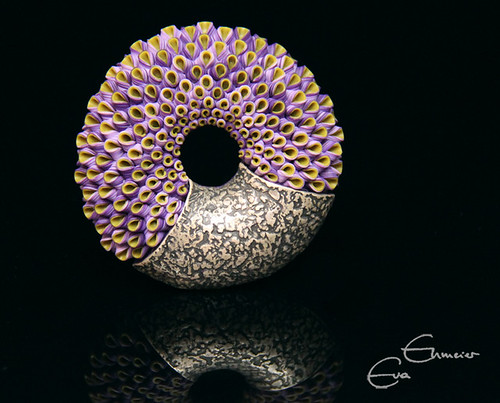
Hoedlgut. Carved Rings, polymer with texture panels.

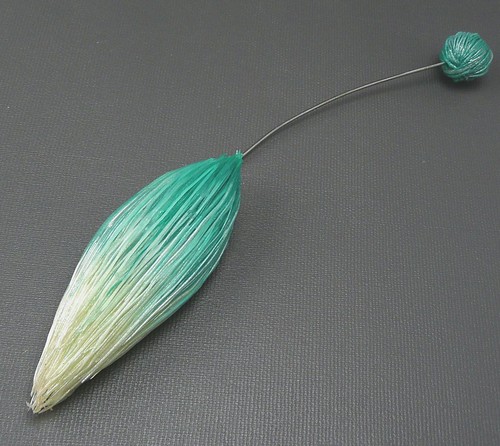
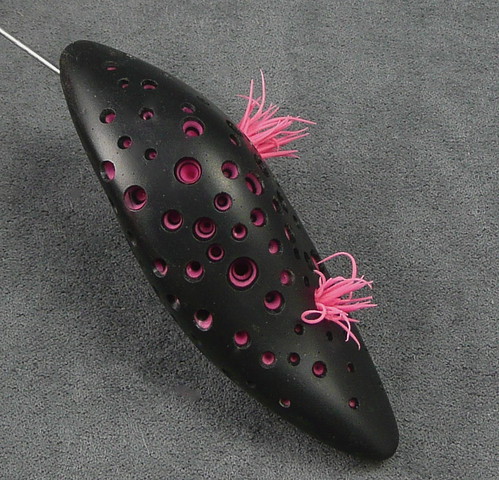
(top row) Malodora. Colour challenge pins. Polymer, and polymer with koosh tentacles.


The humble polymer clay is one of the best materials for model making and creating delicate pieces for casting due to highly durability, detail retention, variable plasticity, and post-cure finishing properties. Yet it is persistently frowned upon as a suitable material for use in jewellery pieces, perhaps as a result of 'craft' overtones, an association that dubiously leads to it being deemed what may be termed 'not precious enough'.

... But, seriously people? Let me tell y'all a little something 'bout preciousness and contemporary jewellery, via the venerable Susan Cohn who is arguably amongst Australia's most influential contemporary jewellers today. Read on for insight ...
 A little history:

The Contemporary Jewellery Movement (CJM) grew out of Modernism, and developed as "intellectual alignment among jewellers took place through a shared questioning of jewellery’s social role, mixed with experimentation with new materials. The cultural resistances of the early movement were configured towards an agenda that emphasised the democratic nature of jewellery and renewed its connection to the body.” 
  
From here the movement adopted three key principles:

"First, the value of precious materials in jewellery was seriously challenged, and jewellery was deflated as a status symbol. The use of non-precious materials would become a benchmark of contemporary jewellery. Second, there was a newly apparent need for jewellery to maintain its relationship with the body, and jewellery was made with the intention that it be worn. Third, contemporary jewellery was made to be accessible for everyone, regardless of age, gender and class.”

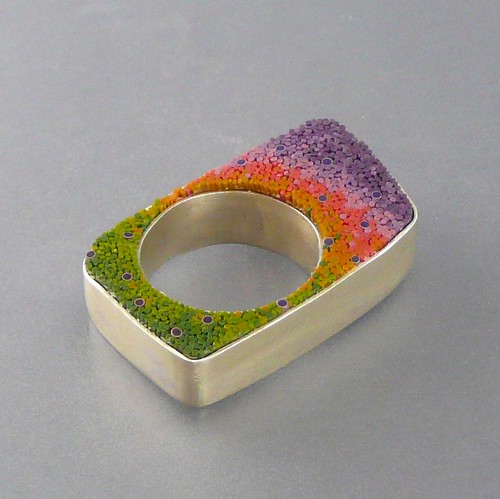
Malodora. RAW 24/52.

Fabricated sterling silver, polymer micromosaic.

Malodora. Hollow, oversize bracelet.


Accessible and using non-precious materials, eh? Yet certain developments occured...

"There is ready acceptance among contemporary jewellery’s niche clientele (which includes its makers, audiences, owners and wearers) that work will be non-precious, experimental and ‘democratic’. However, the radical social overtones of these parameters have largely been absorbed. Jewellers appear unable to reinvigorate contemporary jewellery’s concerns over the object’s values, roles and currency. New jewellers who seek to renew the anti-elitism of contemporary practice must go further than merely rejecting non-precious materials (which have now come into widespread acceptance)." 

“The most contentious debate, and root to all others, was on the ‘proper’ function of jewellery. Views diverged on matters of materials (precious or non-precious), wearability (jewellery or sculpture), and value (elite or democratic). These debates extended the manifesto of the movement and polarised the CJM field. Makers sought to differentiate themselves on common grounds of artistic content (biographical or political), inter-disciplinary positioning (craft or art) and intended audience (gallery or shop)."

The lack of early critical introspection in the movement (especially in the limited local arts scene) may still be manifesting as a need to establish the function of the object itself, but the crux of this is rooted in the ongoing CJM identity crisis. Namely, the desire to distinguish itself from craft. The art/craft/design debate has persistently distracted contemporary jewellery from the potential of other theory.

So how does craft become defined when confronted with a contemporary jewellery movement that still largely favours a handmade approach? 

According to jeweller/critic Bruce Metcalf, craft makers fixate on the functionalities of the finished objects they produce, craft makers, and "tend to envision ‘their production as a means of distributing experience’. Such a stance (which underscores the frequent rejection of theoretical engagement in craft) succeeds in inhibiting the ongoing transformative impact and open interpretation of craft objects in the everyday. It is clear, however, that once objects enter through their display and use into the cultural stream of the everyday – and this is particularly true of jewellery-objects – they attain the potential to alter the ground on which they stand, to transform the networks in which they circulate, and to be syncretically recoded in the process.” 

And from the theorist/critics, Peter Dormer defines craft as a ‘practical philosophy’ or knowledge process, and Sue Rowley states that "The ascribed conservatism of craft is pivotal to maintaining the radical traditions of art,” by acting in contrast to the heavy emphasis of  theory in fine arts discourse, thus establishing an arts-craft dichotomy.

Hoedlgut. Artichoke bangle. Polymer, silver.

It seems the contemporary manifestation of the CJM is not just about the issue of non-precious materials, but about determining the role of the object, and firmly establishing the theoretical standing of the movement in order to move beyond situational debate. Given that most contemporary Australian jewellers will at some stage be using a combination of hand making, outsourcing, utilizing commercial modes of production, and experimenting with a variety of materials, it's fair to say that the design/art/craft border will remain blurred. Get over the Us And Them already!

That's not the say that there has been no progress made in the direction of contemporary jewellery theory. The body of theoretical knowledge grows as gaps in the field become obvious. The dispersed field is rediscovering solidarity as record numbers of design outlets, galleries, and studios proliferate.* With it, the movement is rediscovering the need to position itself strongly amongst the other booming art/design sectors and to engage in critical debate about the future of design.

On the topic of jewellery function, Cohn herself writes that:
“For wearers, the value of jewellery lies in the ways it ‘talks’: its unique capacity to attract, deflect, evoke, provoke, guard, reveal, seduce – in other words to perform. For viewers, formed into anonymous audiences, jewellery provides material for the games of daily life: the reading of peopled environments, forging of alliances, stimulation of desires, and touching between object and skin. The language of jewellery is never fixed because the relationships between makers, wearers and audiences are ever changing." 


This is the crux of the wearable: Evolving networks, performance and codification. 

As part of this, materials become heavily invested with meaning. Perhaps the aversion to polymer clays is an uncertainty over what codes are actually conveyed. I think it can be said, given the examples by the two artists (artisans/designers/jewellers/craftspeople) featured in this entry, that in skilled hands polymer clay does posses the ability to give a nuanced 'performance' as jewellery.

Embedded in the practice of these artists, who also use metalsmithing and more traditional jewellery making methods, polymer clay is realised as a material with great versatility and possibility. It can be sculpted, carved, is highly compatible with other materials, can be finished in any number of ways, and yes, can reach a level of refinement that, in my opinion, makes it worthy of moving up in the esteem of contemporary designers beyond model making applications.

........

*For further reading of Susan Cohn's thesis, Recoding Jewellery: identity, body, survival, the full text can be accessed here.

*For Bruce Metcalf's article on hand making and the question of craft, The Hand: at the Heart of Craft look here.

*Key local contemporary outlets/galleries/studios I recommend:

 Melbourne

Sydney
  • Metalab
  • Object Gallery
  • Studio 20/17


8.9.11

Exhibition: Powerhouse Museum - Love Lace


The Powerhouse Museum's  Love Lace exhibition is one that I have been looking forward to for some time. Fingers crossed that the next trip north allows enough time to contemplate the work in this thoroughly. From the Powerhouse statement:


Lace offers the mystery of concealment and the subtle interplay of space, light and shadows. Its layering can enhance the human body and create alluring effects in interior design and architecture. Though lace is usually associated with textiles, curator Lindie Ward broadened the definition of lace to include any ‘openwork structure whose pattern of spaces is as important as the solid areas’.


Below the break are my picks.*


Joy Buttress. Skin Reveals Skin. 430 x 150 x 100 mm, Pair of opera gloves: laser cut and machine-stitched kid leather.

‘Nottingham played a central role in the world lace trade from 1760 onwards... I have been inspired by a particular portfolio in the school’s archive that was produced in Plauen, Germany, and shown at the Great Exhibition in Brussels 1910. It contains 24 plates of designs inspired by organic forms found in flora and fauna. The complex and sophisticated construction of lace creates a transparency, offering a relationship with both skin (the body) and pattern, my work aims to explore the interaction of lace with the body... Each glove explores the sensitivity and sensuous nature of the gloved hand through historical motifs, digital laser technology and hand stitch.’


Marita MacklinAspergillus. 450 x 1450 (diam) mm, Installation: free-motion machine embroidery, bush dye and hand embroidery on a variety of materials including muslin, organza and netting      

‘We live in a world that has a hidden world within it. A world that is so small it cannot be seen with the naked eye. Only through advanced technology can we see the tiny, fragile forms of the microscopic organisms that inhabit this miniature world. I have created sculptural forms with repetitive textures and motifs based on the most common elements shared by microbes, in particular, those that inhabit and infect the human body.’

Helen Pynor. Untitled (uterus urinary). 290 x 360 X 200, Knitted human hair.
‘In my work I explore the complex dialogues between biological and cultural processes. I’m interested in the registration and transmission of personal and cultural experience in the biological body, and importantly, in the active collaboration and participation of the biological in this process at cellular and physiological levels. In my hair works I’ve knitted together single strands of human hair to form large and small-scale sculptures. These strands were grown by women in a distant country and are now twisted into complex forms by me, entangling bodies, time, memory and place... seen from a distance the works become transparent and ghost-like, entering other in-between spaces of past and present, flesh and memory, beauty and repulsion, living and dead.’


Anneliese Vobis. Patterns of Frost. 250 x 250 x 250 mm, Soft sculpture: heat-treated felt and thread.

'I am concerned with the concepts of change and transience. As Hegel said, ‘it is the process of change which makes evolution possible’.The interrelation of organisms in ecosystems serves as a starting point for intense scientific-related research. My biomorphic-shaped projects explore the metamorphic cycles that organisms undergo in nature. My work reflects natural processes like melting, crystallisation and growth.’

Lenka Suchanek.  Are We Made of Lace? 380 x 380 mm (each), Panels (6): bobbin lace using enamelled copper wire on acrylic panels.

‘Recently, I came across electron microscope images and it felt like finding the missing piece of a puzzle. The images of cell structures looked exactly like lace. Plants, sea plankton, humans … all made from a primordial lace that cannot be seen with unaided eye, but it pervades everything. We live in an awesome lace world.'


* Picks are completely based on a bias relating to the microscopic, intimately worn articles of clothing, disgust surrounding shed body particles like skin and hair, and tenuous forms.  


Brief Reflections on Attachment: 'between' and the skin wearable

Firstly some background... Over the past year much of my work has involved treating the skin as a wearable by creating temporal custom jewellery and seeing what possibilities come out of subverting accepted practices of adornment.

This has been a process of (un)learning by abandoning assumed sites of adornment (outcome: jewellery for the inner nostril), addressing preciousness (outcome: gold leaf shaped by the lived experience of the wearer's body and movements), and challenging cultural assumptions surrounding beauty practices (outcome: tan lines from a lurid artificial tan in the form of enormous, lacy sebaceous glands).

Working with the skin as wearable has required an ethical, theoretical and practical awareness of the organ's porosity. Initial experimentation with temporal wearables has developed into a practice that places emphasis on collaborations, the philosophy of perception, social signification, and the properties of individual bodyscapes. The physical 'attachment' of skin and wearable is by necessity brief, and the skin left ultimately untouched at the end of the wearable life. The focus becomes memory, codification, and the constitution of experience.
Tarryn Handcock. Tanlines (day 1). Artificial tan, sebaceous gland lace, carbon transfer. 2010. Photo: Matthew Burgess


Now to the present... 


Both teaching and a recent return to creating tangible objects has led me to survey the realm of the wearable with new eyes. A latent fascination with methods of joining has resurfaced, along with a growing awareness of what it means to attach artefacts to our person in a particular way, and for a particular period.

The (current) title of my thesis  is ‘Nostalgic Skin’: dissipating boundaries, between body and wearable. More discussion at a later date, but the term most pertinent to this reflection is 'between'. That's a cracker of a word isn't it? Slippery, oscillating, amorphous, adrift. In joining and attaching objects/materials to the body 'between' becomes a murky trope. States form 'between' skin and wearable spatially, physically, psychologically, and symbolically.
 Cinnamon Lee. Covert Jewels. 2011.

The matter at hand... Established in jewellery theory is the duality of the worn object as both a signifier for an audience and an artefact imbued with personal value. Established too, in this is the dichotomy between the intimate interior of the ring and its outer, public face. Reveal/conceal, as beautifully illustrated by Cinnamon Lee's recent work, Covert Jewels shown at Metalab, is often about the private experience hidden from the world at large, between the object and wearer.

For wearables in direct contact with the skin - garments, prosthetics and medical aids, jewellery-objects like necklaces, earrings, bracelets, rings - this is a relatively direct relationship of skin to non-skin material. The methods of 'attachment' to the body include, but are by no means limited to, encirclement, piercing, suction, wrapping, and tension. Between skin and wearable there is a perceptual relationship formed around sensory input from the object's materiality, method of wear, site, biofeedback, memory, and imaginative possibilities inspired by the experience of the artefact with the lived body over a period of time. This relationship is based on the assumption that these artefacts are removable, but that enduring relationships can result in an incorporation into body schema and self-identity. There may be a clear distinction between the intimate, personal zones of the artefact (the socket of a prosthetic, interior of a ring, hook of an earring, inner seam of a dress) and the zones that are public. These are most often established in accordance with the concealed/revealed zones of skin, the private areas forming out of the experience generated 'between' skin and wearable.


(left) Kathleen JacksonSkin: Necklace. Prosthetic gelatine jewellery attached to the wearer using prosthetic adhesive, prosthetic gelatine blender, and rubber mask grease paints


(right) Tiffany Parbs. Rash. 2004. Skin and rash from allergic reaction.


A question...

What does it mean for the skin to be implied in the 'wearable'? I have stood by the interpretation that the 'wearable' is an entity that implies the body and may be worn or borne by it. Yet what it means to 'attach' this to the skin of the body has become something of a contentious issue.  

The garment, jewellery-object, cosmetics, prosthetics, and medical aids are all worn in direct contact with the skin and have distinct socially encoded and functional properties. Body modification practices including implants, artifical organs, bone replacements and tattoos are assimilated into the body on a permanent basis, the skin barrier willfully torn asunder. And nano-technology, oils, energy waves, dusts, bacteria, parasites and viruses all traverse the porous skin membrane to be carried with the body and be manifested in various ways. Not only are the methods of attachment at issue, but the very ascertainment of boundary and what might not be worn, borne or attached to the body by some means or another is at stake.
The contemporary wearable could be attached through means previously unacknowledged - absorbed and embedded in our being, or ingrained in our surface. It could be slowly dissipating like dust motes in sunlight, suspended on our outer layers of garments, absorbed as an oil, projected from the body, or shed like fleeting clouds of dandelion spores in our wake.


more thoughts to come...